
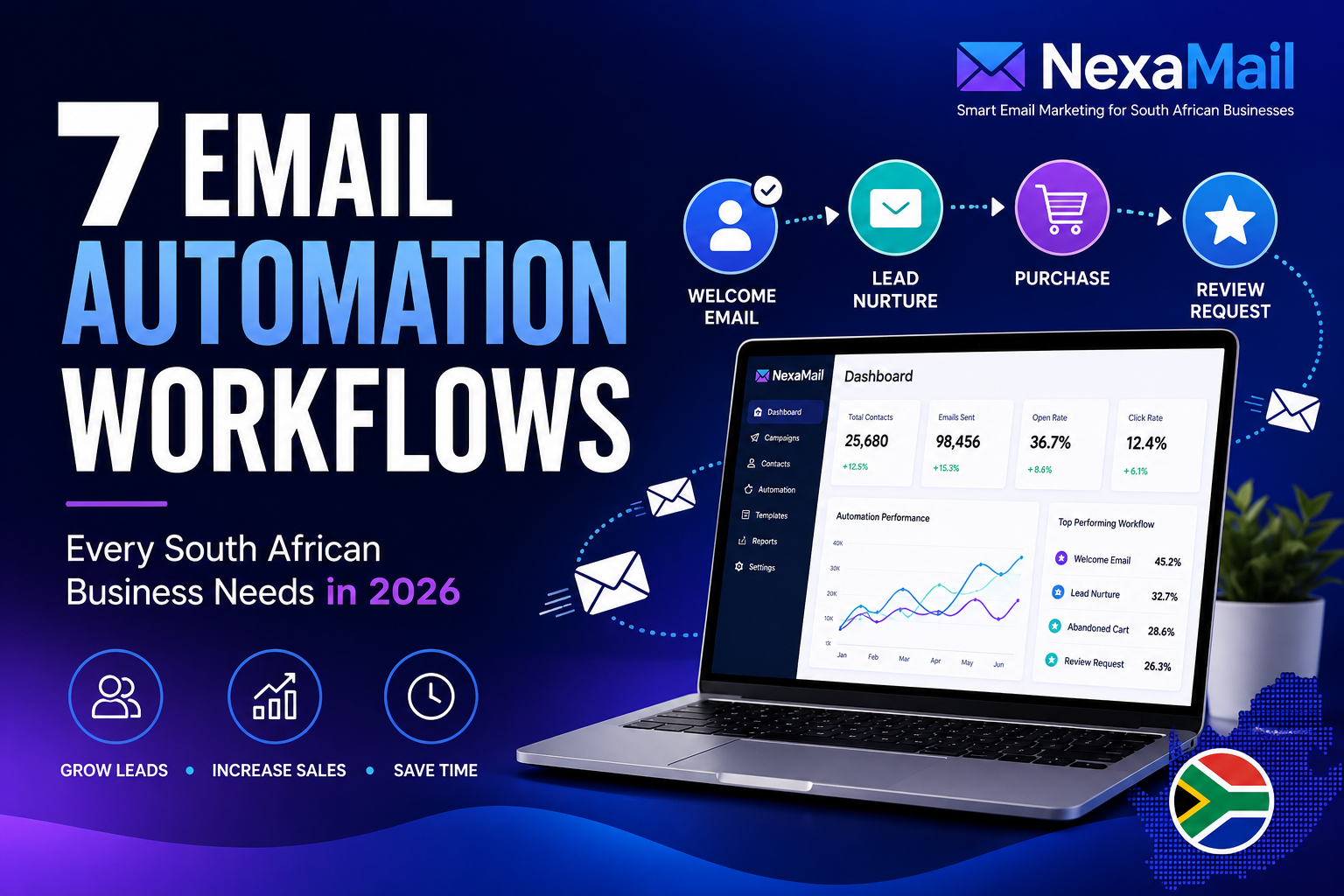
Email marketing has evolved far beyond newsletters and promotional blasts.
In 2026, the businesses seeing the highest returns from email marketing are using automation workflows to engage customers at exactly the right moment. Instead of manually sending emails, automation allows you to build customer journeys that work 24/7—turning leads into customers and customers into loyal advocates.
For South African businesses looking to scale efficiently, email automation is no longer optional. It’s a competitive advantage.
What Is Email Marketing Automation?
Email marketing automation is the process of sending emails automatically based on customer actions, behaviour, or specific triggers.
For example:
- A new subscriber joins your mailing list
- A customer abandons their shopping cart
- Someone downloads a guide from your website
- A client hasn’t engaged with your emails for 30 days
Instead of manually following up, your email marketing platform handles the communication automatically.
With NexaMail, businesses can create powerful automated workflows without needing technical expertise.
Why Automation Matters More Than Ever
South African SMEs face increasing competition online.
Consumers expect:
- Faster communication
- Personalised experiences
- Relevant content
- Consistent engagement
Automation helps businesses meet these expectations while saving time and reducing marketing costs.
Benefits include:
- Higher conversion rates
- Better customer retention
- Increased sales
- Improved customer experience
- Reduced manual workload
1. Welcome Email Series
First impressions matter.
When someone subscribes to your email list, they are most engaged within the first 24–48 hours.
A welcome sequence can:
- Introduce your business
- Build trust
- Explain your products or services
- Encourage a first purchase
Recommended flow:
Email 1: Welcome and introduction
Email 2: Your story and unique value
Email 3: Product recommendations or service overview
Email 4: Special offer or call-to-action
Businesses that use welcome automations often see significantly higher engagement than those sending one-off campaigns.
2. Abandoned Cart Recovery
For e-commerce businesses, abandoned carts represent lost revenue.
Many customers add products to their cart but leave before completing checkout.
An automated recovery workflow can remind them to return and complete their purchase.
Suggested sequence:
- Reminder after 1 hour
- Follow-up after 24 hours
- Final incentive after 72 hours
Even recovering a small percentage of abandoned carts can generate substantial additional revenue.
3. Lead Nurturing Workflows
Not every prospect is ready to buy immediately.
Lead nurturing workflows help educate potential customers until they are ready to make a decision.
Examples include:
- Educational content
- Industry insights
- Case studies
- Product demonstrations
- Success stories
The goal is to stay top-of-mind while building credibility and trust.
4. Re-Engagement Campaigns
Inactive subscribers can reduce engagement rates and impact deliverability.
A re-engagement workflow helps reconnect with subscribers who haven’t opened or clicked emails in a while.
Typical triggers:
- No opens in 30–60 days
- No clicks in 60–90 days
Possible emails:
- “We miss you” campaigns
- Exclusive offers
- Updated content
- Preference update requests
If subscribers remain inactive, you can automatically remove them from future campaigns to maintain list quality.
5. Customer Onboarding Sequences
For service-based businesses and software platforms, onboarding is critical.
A structured onboarding workflow can:
- Reduce customer confusion
- Increase adoption
- Improve retention
- Lower support requests
An onboarding series might include:
- Account setup instructions
- Product tutorials
- Best practices
- Frequently asked questions
- Success milestones
This ensures customers receive value quickly.
6. Birthday and Anniversary Campaigns
Customers appreciate personalised communication.
Automated birthday and anniversary emails create positive brand experiences and often generate strong engagement.
Ideas include:
- Birthday discounts
- Loyalty rewards
- Exclusive offers
- Personalised messages
These campaigns help strengthen long-term customer relationships.
7. Feedback and Review Requests
Customer feedback is one of the most valuable assets a business can collect.
Automated review workflows can trigger after:
- A purchase
- A completed project
- A service appointment
Benefits include:
- Improved online reputation
- Better customer insights
- More social proof
- Increased trust for future buyers
How NexaMail Makes Automation Easy
NexaMail was built with South African businesses in mind.
Using NexaMail, you can:
- Create visual automation workflows
- Segment audiences based on behaviour
- Trigger emails automatically
- Monitor performance through analytics
- Stay aligned with POPIA-compliant marketing practices
Whether you’re running a startup, agency, online store, school, or growing SME, automation allows you to scale communication without increasing workload.
Final Thoughts
Email automation is one of the highest-return investments a business can make in 2026.
The right workflows help you generate more leads, increase sales, improve customer retention, and deliver better customer experiences—all while saving valuable time.
Businesses that automate strategically gain a major advantage over competitors still relying on manual email marketing.
If you’re ready to build smarter customer journeys and grow your business with automation, NexaMail provides the tools you need to get started.
Visit NexaMail today and discover how automated email marketing can transform your business growth.